New Fed Chair Dumped Major AI Holdings: Inside Kevin Warsh's Disclosed Divestments
New documents show assets sold by Fed Chair following conflict of interest divestment

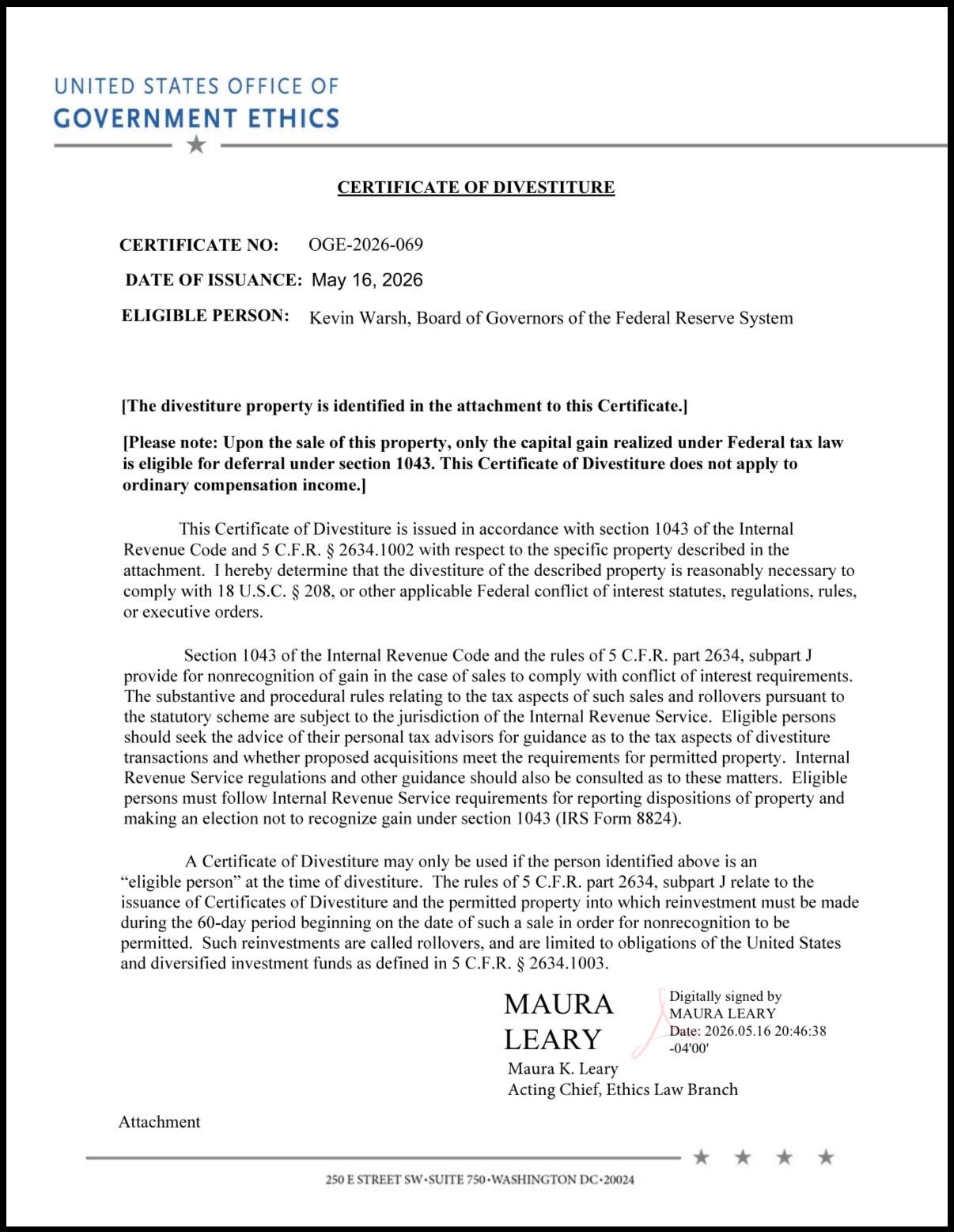
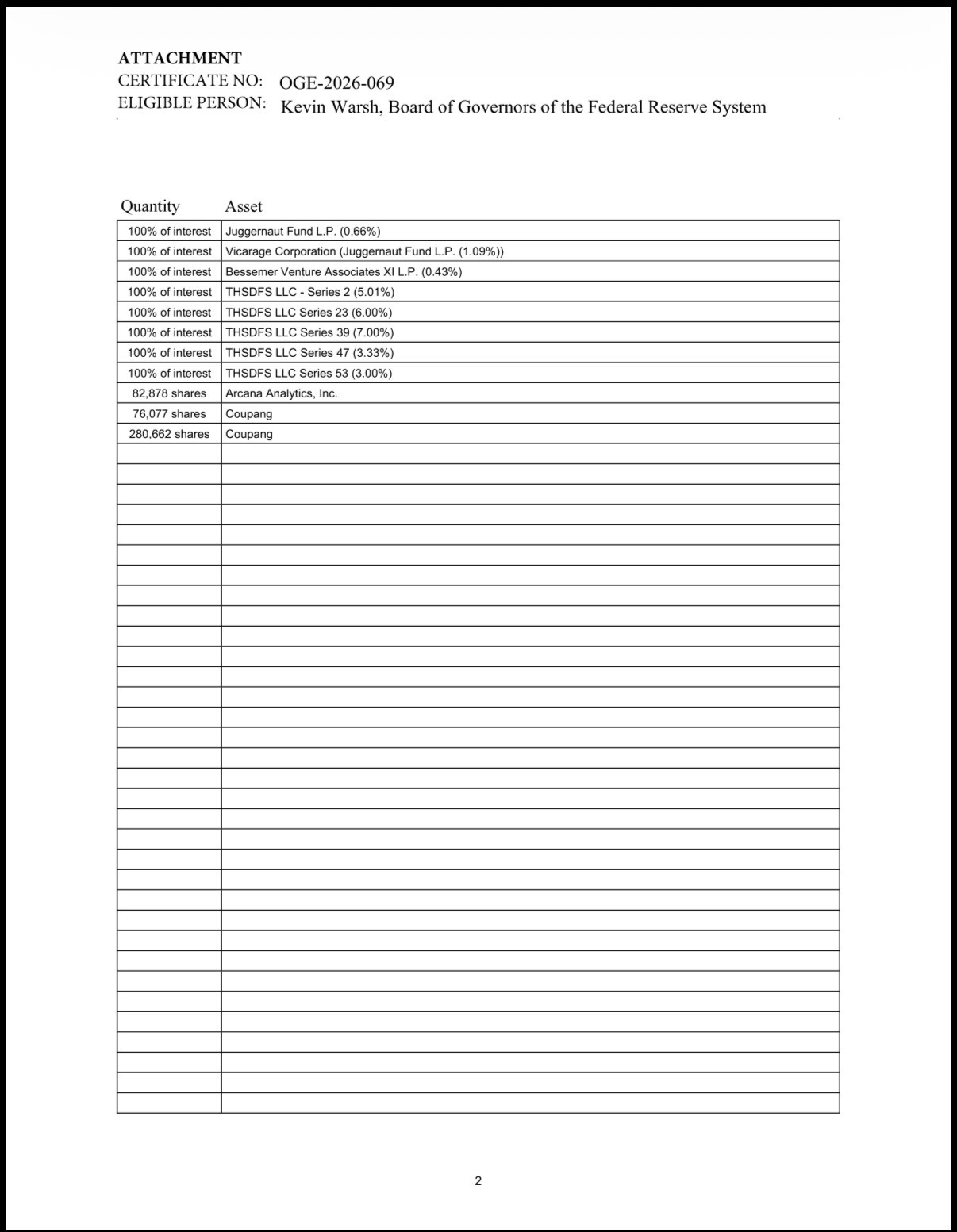
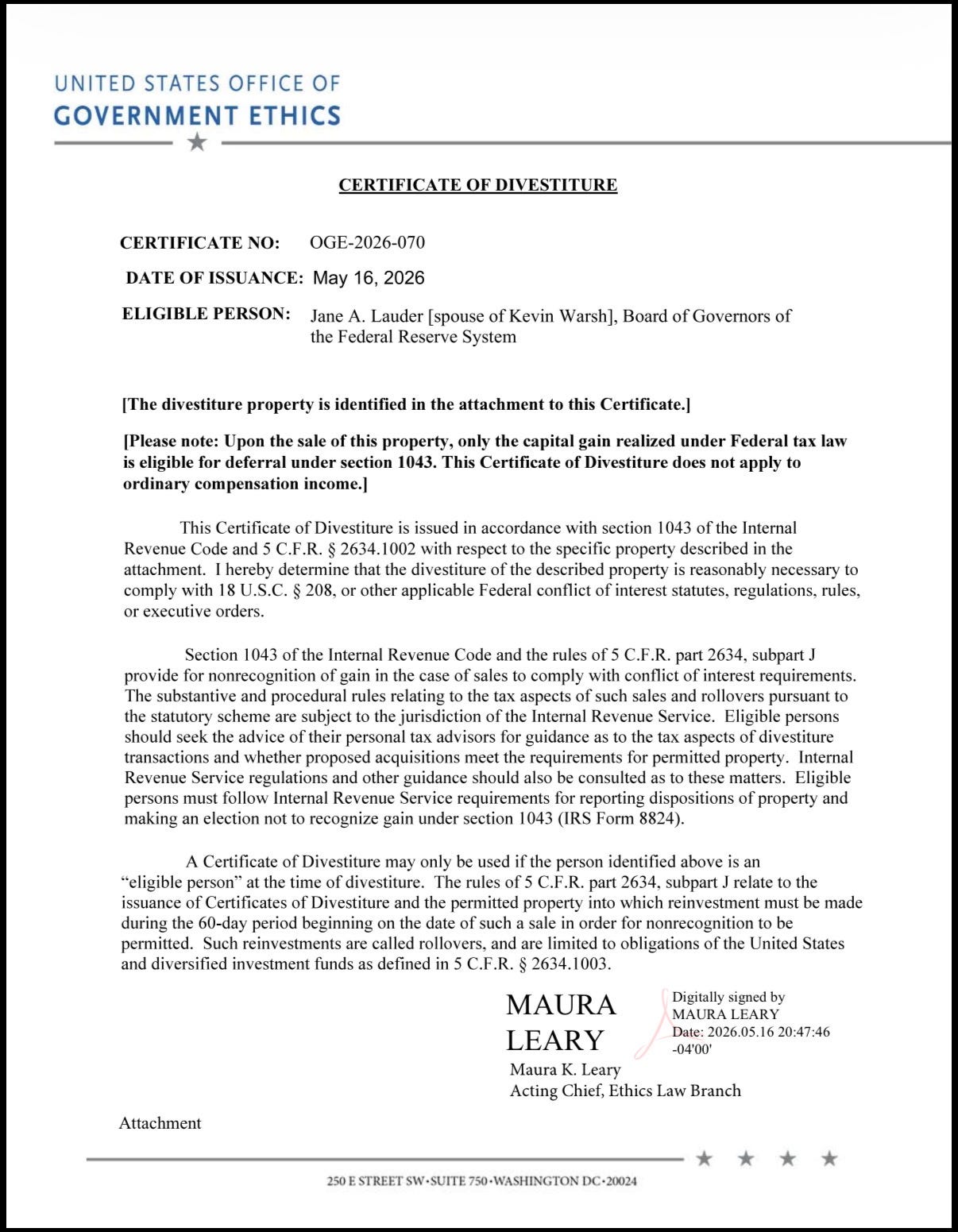
I’ve obtained documents from the U.S. Office of Government Ethics (OGE) revealing Kevin Warsh’s first round of divestments. Warsh is the first Chair of the Federal Reserve to appear before the Senate without fully disclosing his assets to the Banking Committee prior to confirmation. Instead, Warsh made a deal with OGE, agreeing to divest from his current $200+ million holdings within 90 days of taking office. We are now a third of the way through that period, and this morning at 8:31am, I received Warsh’s Certificates of Divestment from OGE, dated May 16, 2026. The filings do not show the exact dollar amount each holding was sold for, date of sale, nor buyer.
This week I’ll be publishing a Kevin Warsh deep-dive: what we can expect from his leadership as Fed Chair, and full analysis of his confirmation hearing. Subscribe so you don’t miss it.
While publicly pushing the narrative that AI has been, and will be, great for the U.S. economy, Warsh has been heavily invested in, and working for artificial intelligence (AI) driven tech companies and incubators. Warsh directly invested in Buy Now, Pay Later (BNPL) consumer lending platforms, capital investment firms that are heavily leveraged in Pentagon contractors, and an asset management firm suing for $1 billion in Puerto Rico’s defunct municipal energy bonds. Since 2018, Warsh has also been the sole proprietor of his own financial advisory firm, Vicarage.
AI
Among the assets dumped by Warsh are hundreds of thousands of shares in Coupang, of which Warsh serves on the board. According to Coupang’s CEO Harold Rogers, the corporation is “building the future of commerce with AI.” The U.S.-based tech company specializes in end-to-end AI-powered “global logistics infrastructure.” Coupang operates in “over 190 countries and regions.”
Rogers describes their niche in a haunting way, essentially using AI powered surveillance to sell us the stuff they’ve predicted we’d by:
Because of that machine learning and that predictive ability, we know in a certain region, up to a certain neighborhood, what’s most likely to be ordered in that area that night, and we get it within five miles before they click order.
Warsh executed two separate sales of his Coupang holdings: one for 76,077 shares, another for 280,662. A conservative estimate (at $15 per share) suggests the sale of Warsh’s Coupang holding brought in about $5.4 million.
Warsh sold his portion of the venture capital and private equity firm that helped launch Anthropic, Waymo, ElisaAI, Legora, Abridge, and more. Boasting over 150 IPOs and more than 420 portfolio companies, Bessemer Venture Associates LLC’s work has recently focused on bringing “together the next generation of AI founders,” and helping “visionary thinkers transform bold concepts into viable AI startups.”
Warsh has been singing the praises of AI while being heavily invested in it. Warsh argued in a November op-ed that the Fed should rescind its prediction of continued low economic growth and price increases (stagflation), arguing that not only will AI reverse inflation, AI is increasing productivity. In his own words for the Wall Street Journal:
First, the Fed should discard its forecast of stagflation in the next couple of years, as if subpar growth and inflation 40% above target is the best that can be done. AI will be a significant disinflationary force, increasing productivity and bolstering American competitiveness. Productivity improvements should drive significant increases in real take-home wages. A 1-percentage-point increase in annual productivity growth would double standards of living within a single generation.
Warsh entered into an agreement with OGE to divest from “virtually all” of his current holdings on April 10, 2026. Eleven days later, on April 21, 2026, Warsh walked back his claims about AI during his confirmation hearing in the Senate:
Senator Kennedy: I’ve heard your argument the last few months about, ‘artificial intelligence has made us so productive, labor so productive, that companies don’t have to raise prices, therefore inflation isn’t a problem, therefore rates can be cut.’ Do you really believe that right now?
Kevin Warsh: No, that is not how I would characterize the story on AI.
Senator Kennedy: Okay. But you’ve said what I just said, haven’t you?
Kevin Warsh: Uh, I’ve said this is the most disruptive moment in modern economic history, in the US and the world, I’ve said that artificial intelligence, AI, should—
Senator Kennedy: Ok let me stop you–
Kevin Warsh: –It’s gonna have a big effect.
Senator Kennedy: –the chair is gonna cut me off.
Kevin Warsh: Oh sorry.
Senator Kennedy: Here’s my worry, that a lot of the stuff about artificial intelligence making us more productive, is a bunch of hype by people who want to sell stock and an IPO. Okay, I’d be careful there. (To Senator Tim Scott) Thank you Mr. Chairman.
Kennedy ended his line of questioning there, seemingly uninterested in any more of Warsh’s waffling on the subject. Warsh had nothing but positive things to say about AI while directly invested, but took a more measured approach after initiating his divestment. It’s unclear if Warsh’s investments in Coupang and Bessemer were sold prior to the Senate hearing and walking back his claims about AI and productivity, because Warsh’s Certificate of Divestiture does not list a date of sale.
Senator Kennedy’s point about AI productivity being “a bunch of hype by people who want to sell stock and an IPO” is well taken. AI doesn’t seem to be increasing economic productivity in a meaningful way. 95% of AI pilot programs delivered no return on investment (ROI) for organizations, despite an estimated $30-40 billion investment in generative AI, according to one MIT study. 73% of executives reported AI ROI falls short of expectations, per Globalization Partners.
Financial Firms
Though Warsh’s AI investments are particularly sexy given the broader context, his other holdings are arguably more interesting. He reports 82,878 shares in Arcana Analytics, a market analysis tool for investors. According to their website:
The Arcana system puts together single-stock options, implied earnings moves, macro exposures, consensus estimate revisions, positioning, factor drivers and more to make sure you’re not missing what is driving the vast majority of stock movement.
Considering the Fed’s monetary policies directly impact macro conditions, it feels like a conflict of interest for Warsh to be so heavily involved in a company whose success may be influenced by how accurately they predict Fed decisions. I have yet to hear back, but sent the following question over to Arcana this morning:
How might arcana help anticipate or invest according to macroeconomic shocks to the system, such as changing interest rate policies? Or Quantitative Easing by the Federal Reserve?
Warsh has also been running, since at least 2018, his own financial consulting and advisory practice under the name Vicarage LLC and Vicarage Corporation. In April, Warsh disclosed to OGE that he is the sole proprietor of his advisory firms, telling OGE, “I will cease providing advisory services through these entities.” Either thanks to my lack of imagination or general ignorance of the world above my tax bracket, I was unaware of the fact that someone can pay a former Fed governor to be their financial advisor.
The new Fed Chair also had holdings in billionaire Stanley Druckenmiller’s Juggernaut Fund, which appeared on his Certificate of Divestiture, which is managed by the Duquesne Family Office. In an April 17th letter to OGE, Kevin Warsh committed to resigning from his position at the Duquesne Family Office.
Tax Break
Kevin Walsh is also deferring capital gains tax on his sold assets, utilizing a section of the tax code typically used for force sale of assets due to natural disaster, condemnation, and eminent domain.
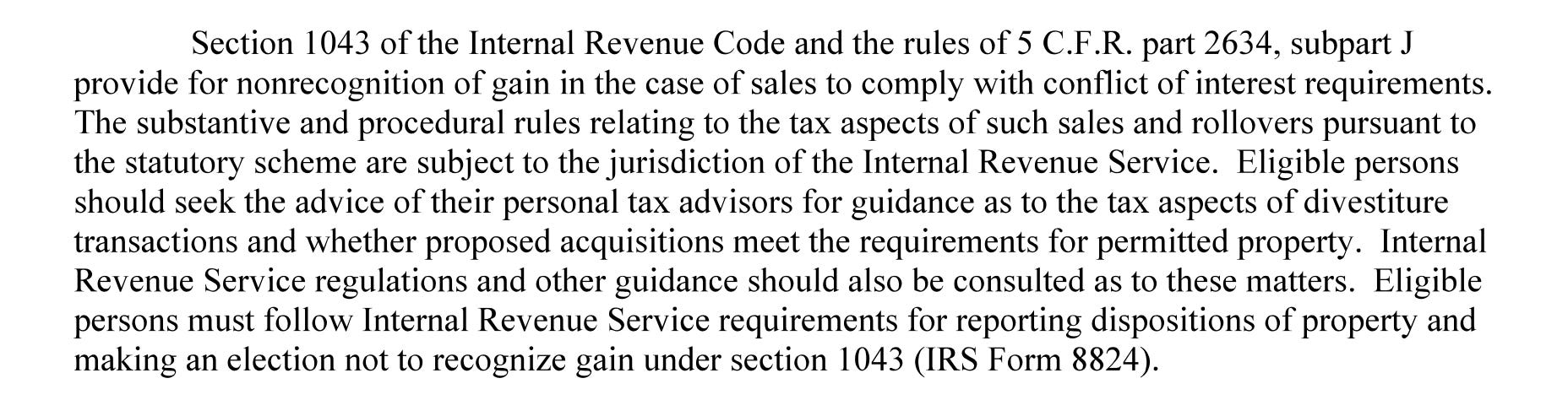
According to OGE, Warsh is only eligible for this tax break if he submitted his Certificate of Divestiture before selling his assets. I have reached out to OGE for comment on that matter but have yet to hear back.
Resigning from Condoleezza Rice’s Think Tank
In addition to promising to divest his assets, a lesser-discussed portion of Warsh’s OGE agreement was his promise to resign from his official positions upon confirmation:
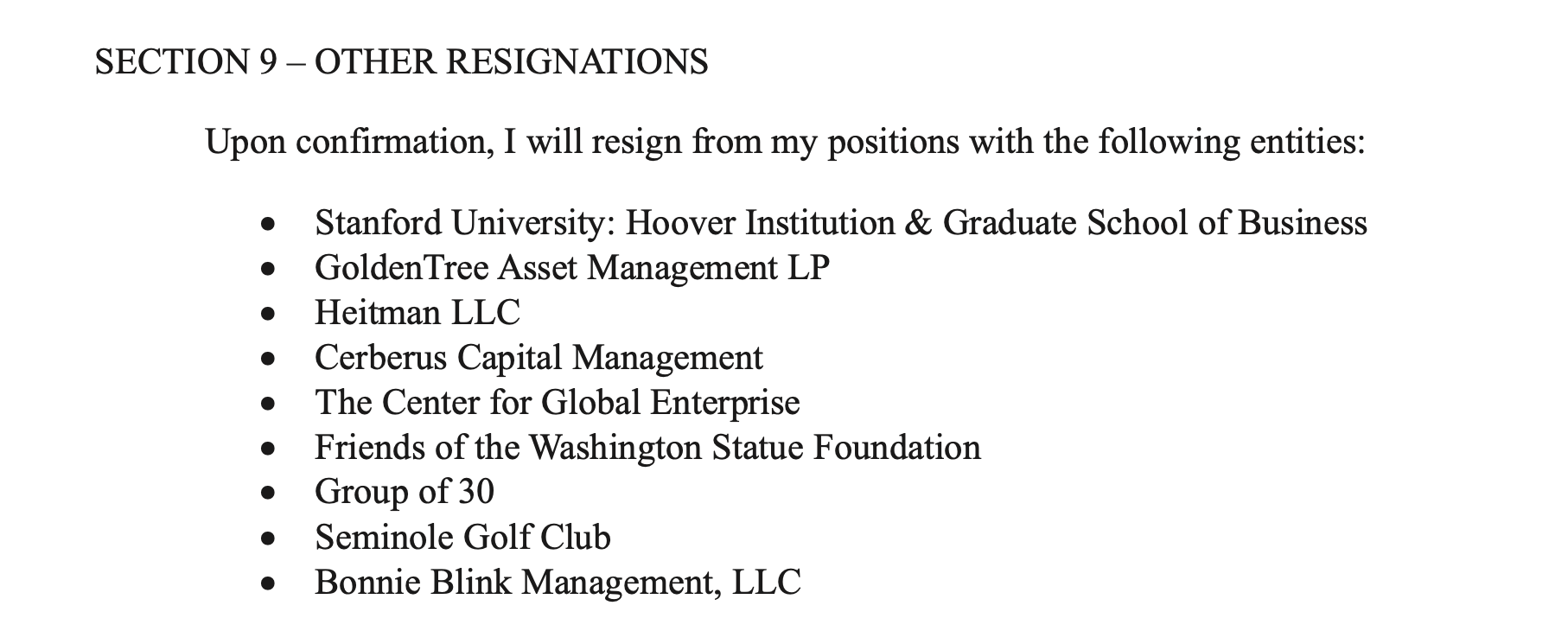
The Hoover Institution is a conservative think tank run by Condoleezza Rice. When California passed a new minimum wage for fast food workers, Hoover ran a series of stories with a misleading finding: that a spike in unemployment occurred as a result of the wage hike. In reality, California saw employment growth in the fast food sector. Hoover had to retract their publications and issue corrections. I reported this for Drop Site in December 2024.
It is shocking that the Chair of the Federal Reserve was affiliated with an institution that spread a glaringly biased economic narrative under the banner of empirical research and evidence-based policy despite the egregiously sloppy mathematical errors—or worse: intentionally misrepresentation data.
Cerberus: Defense Contractor Investor
Another resignation that stood out to me in this list is Cerberus Capital Management, a firm at the center of perhaps the most stunning example of government corruption this year. Cerberus is a global private equity firm co-founded by billionaire Steven Feinberg.
Feinberg currently serves as the deputy Secretary of Defense in the Trump administration. Upon stepping down as CEO of Cerberus and taking office at the Pentagon, Feinberg took on the “Iron Dome” project. Officially titled: Missile Defense Agency Scalable Homeland Innovative Enterprise Layered Defense (SHIELD), the project has a ceiling of $151 billion.
The Pentagon now has awarded SHIELD funds to several firms Cerberus has major holdings in: North Wind, Stratolaunch, Red River Technology, and NetCentrics. In December 2025, Stratolaunch, Red River Technology and NetCentrics were quietly given SHIELD contracts. However, when North Wind got theirs, they boasted on linkedin.
During Warsh’s tenure working for Cerberus as an advisor, he collected $750,000 in consulting fees.
Vultures in Puerto Rico
Warsh also promised to resign from his position at GoldenTree, after raking in more than $1.5 million in consulting fees. GoldenTree is one of the firms trying to profit off of Puerto Rico’s energy crisis, demands the Puerto Rican public power company (PREPA) to pay bondholders over $8 billion, leading a group of investors that claim to be owed around $1 billion.
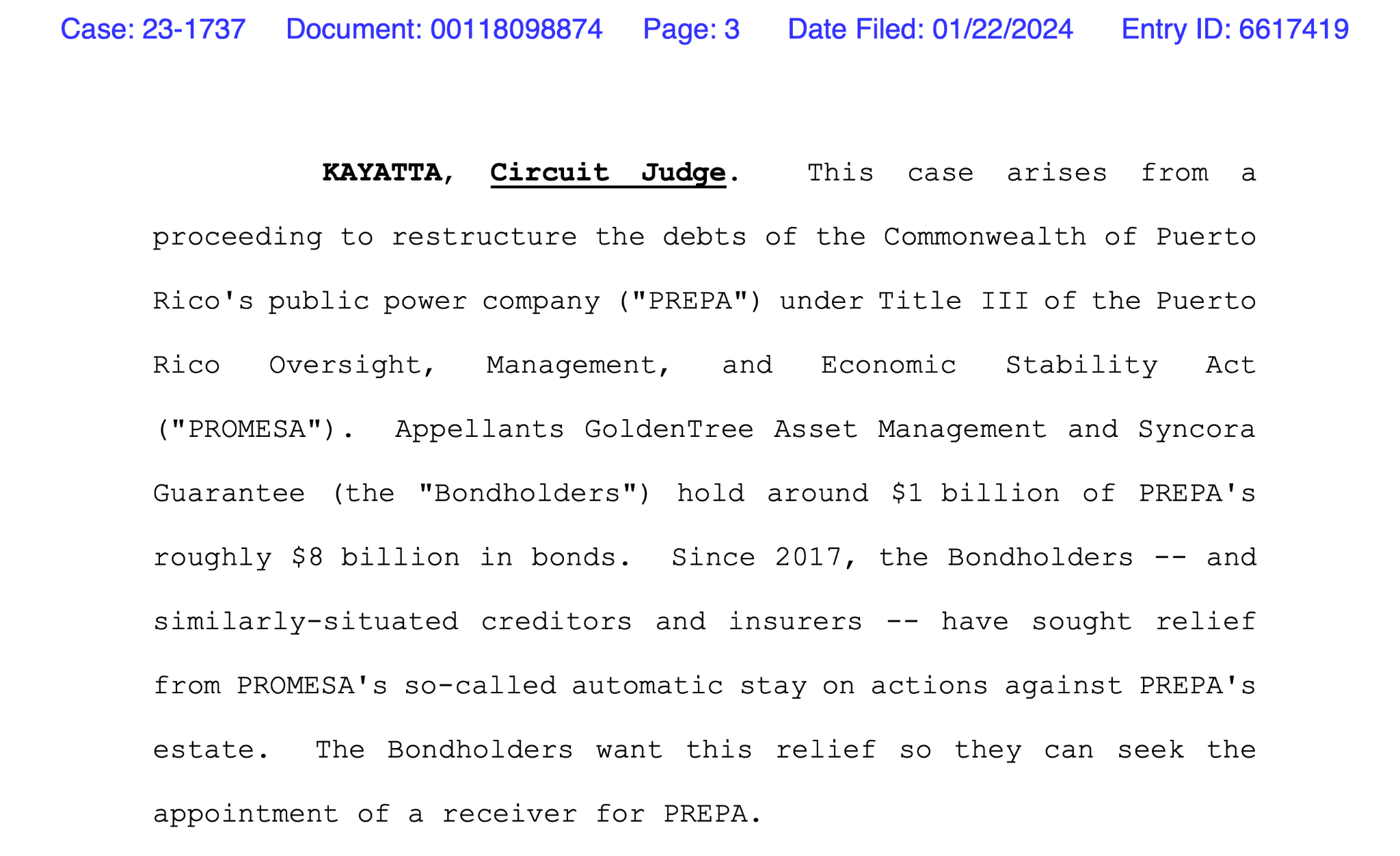
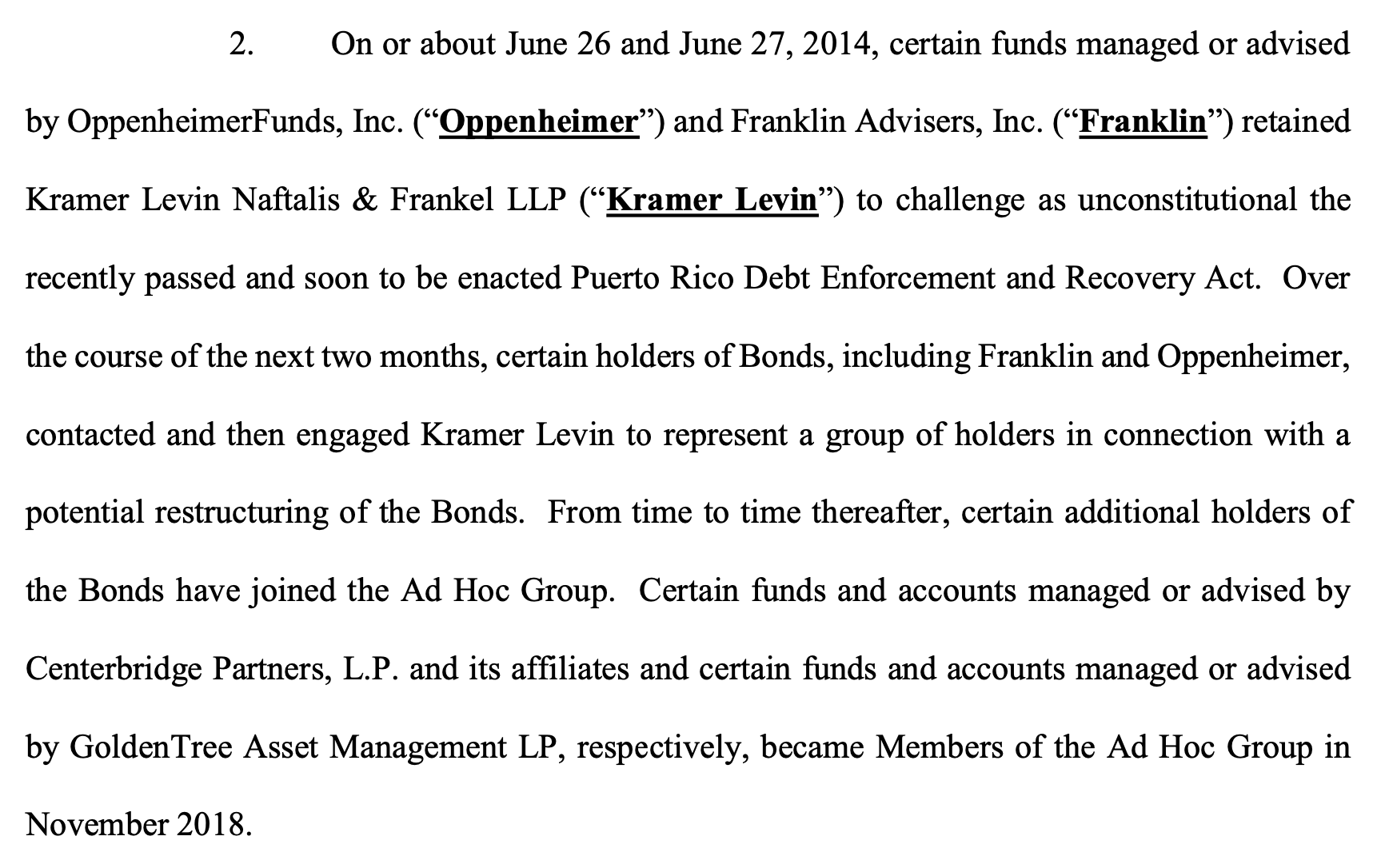
It is a major misconception that the vultures forcing PREPA to settle debt through raising taxes and energy prices are honest investors that just want to be made whole. Some of these investors, including GoldenTree, purchased bonds after the bankruptcy declaration and devastation following major hurricanes Maria and Irma in 2017. Court proceedings show GoldenTree attempted to capitalize on the crisis, purchasing bonds from the duressed municipality as late as November 2018.
Predatory Lending: Buy Now, Pay Later
Kevin Warsh has directly invested in Buy Now, Pay Later (BNPL) companies, including: Cherry, Tilt, and Kikoff. Cherry specializes in medical lending. Specifically, deferred interest loans to patients who cannot afford medical, dental, or veterinary care.
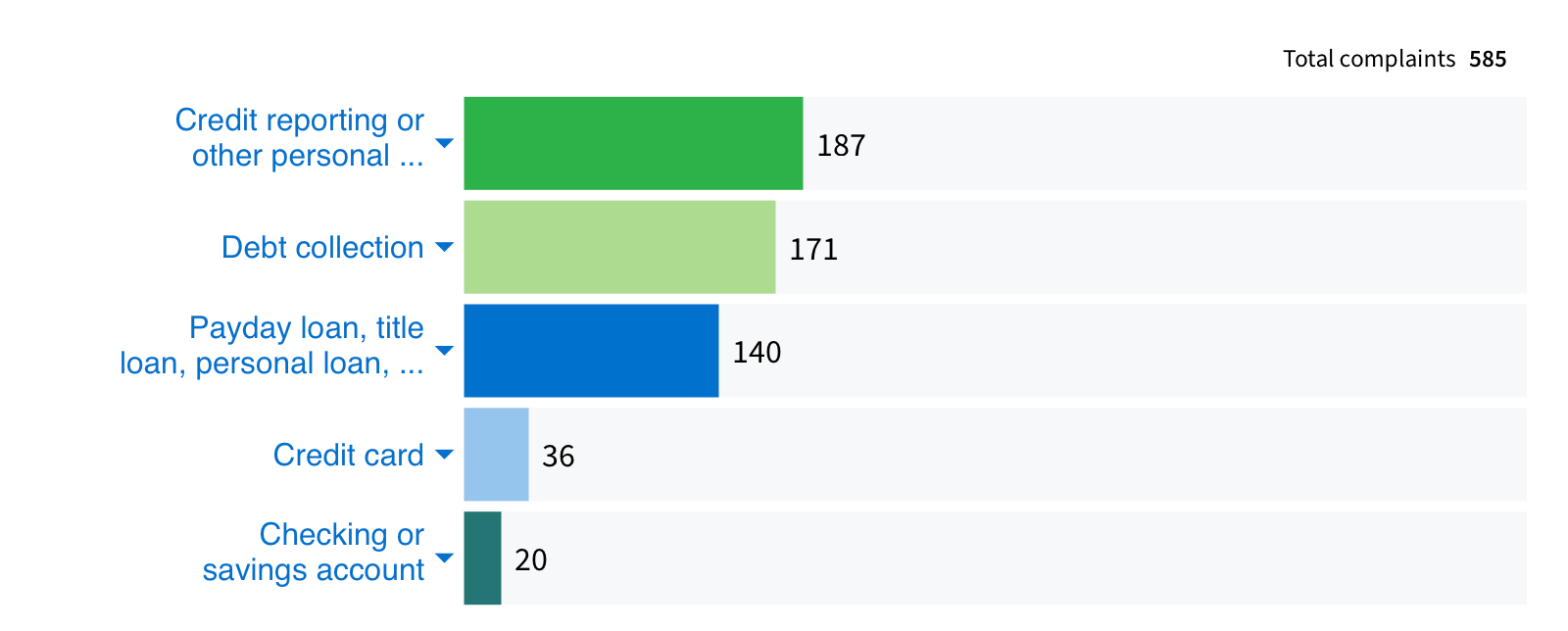
Cherry has had 585 complaints with the Consumer Financial Protection Bureau (CFPB) over the past three years, ranging from incorrect information on credit reports, to attempts to collect debts that are not owed.
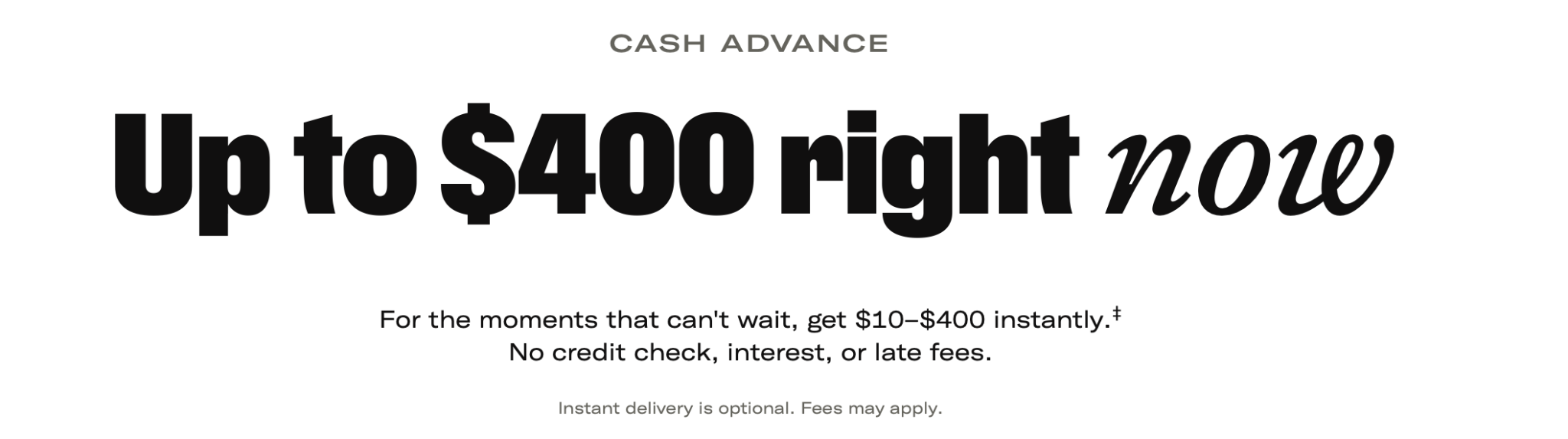
Tilt offers cash advances, and markets their consumer lending platform as some kind of populist answer to economic inequality. This is directly from Tilt’s “about us” page:
Today, over 100 million Americans, and billions more globally, lack reliable access to fair credit. But we see a side of people that traditional lenders don’t care to. We see the hard work they’re putting in and how far they’ve come, and we think that should count for something. So we’ve created our own way of underwriting that credits the working, whatever they’re working toward.
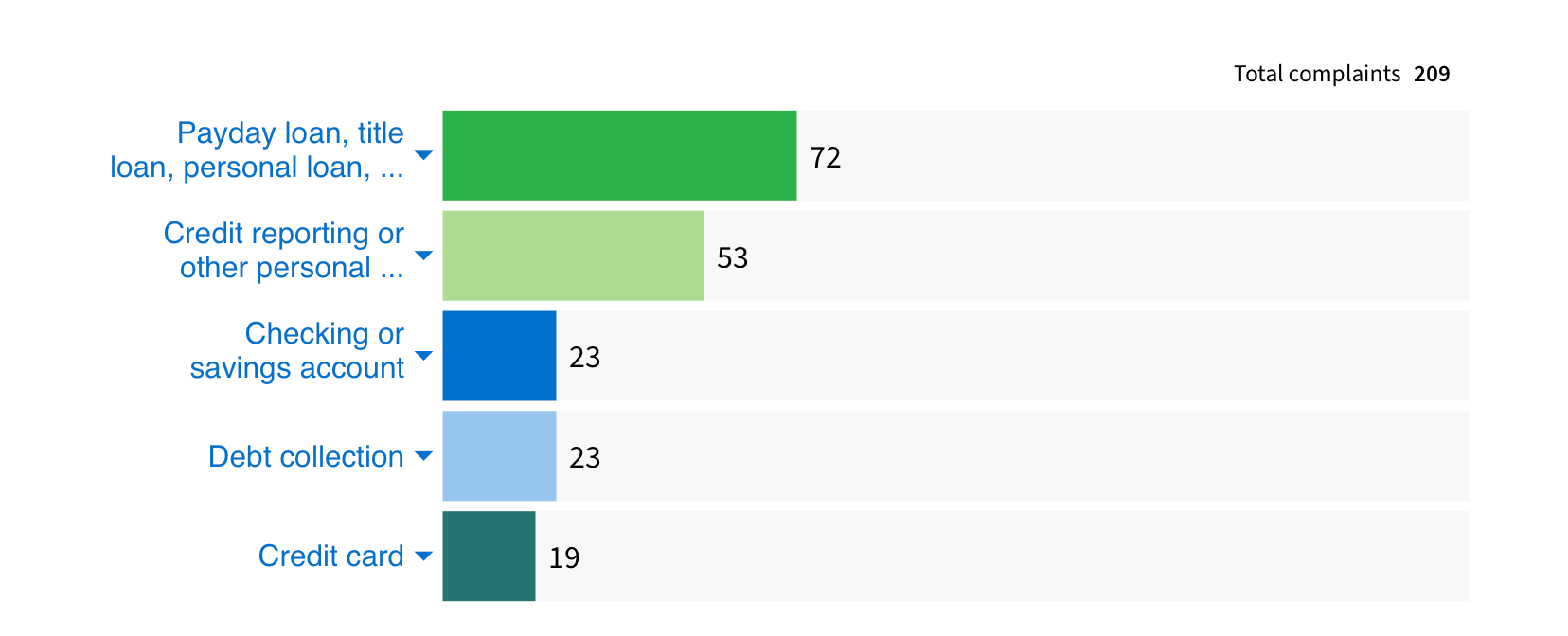
Tilt has had 209 CFPB consumer complaints over the past three years, ranging from surprise fee charges, to an inability to stop bank withdrawals.
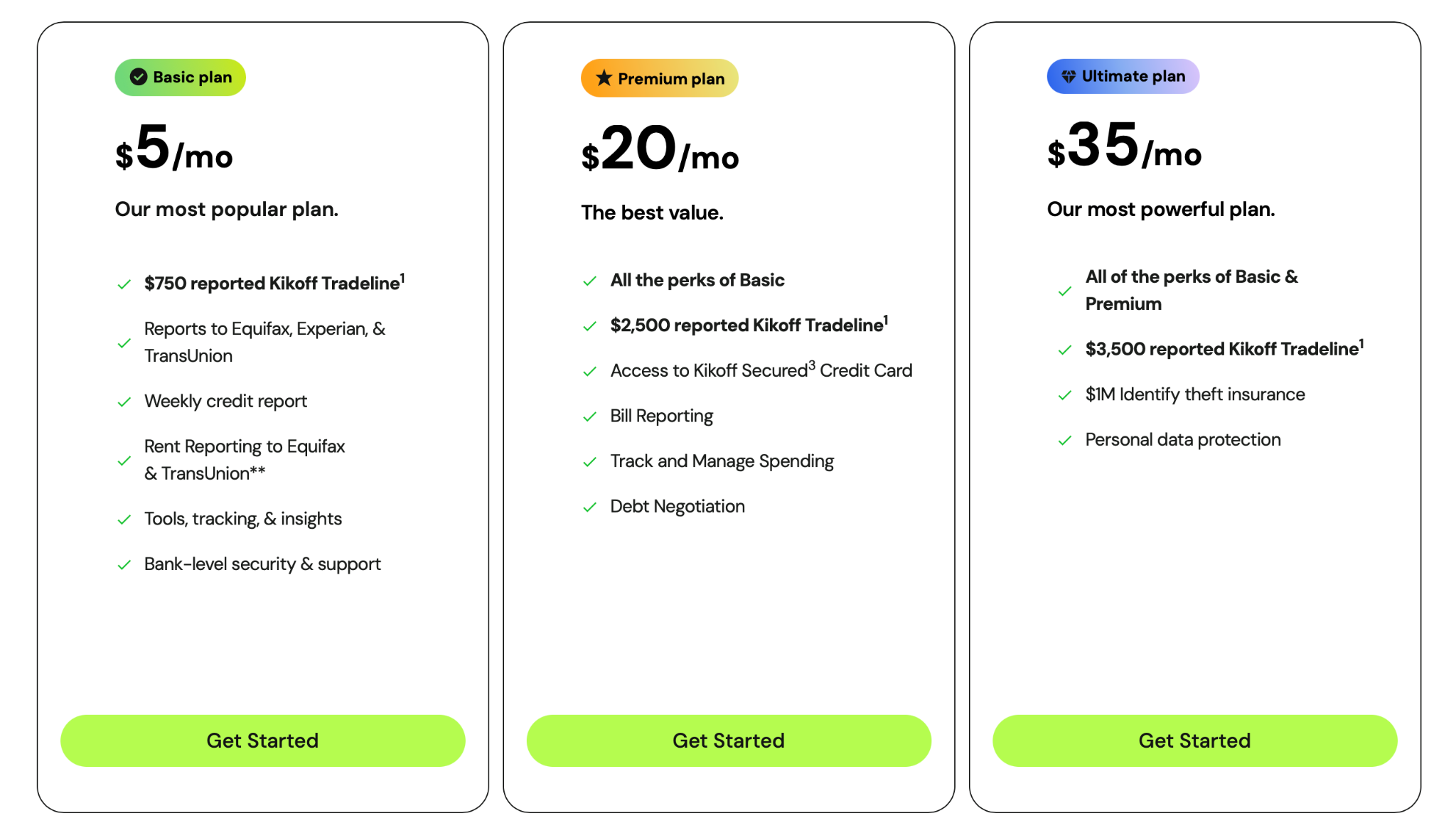
Kikoff markets itself as a credit building company, offering lines of credit in exchange for a monthly fee.
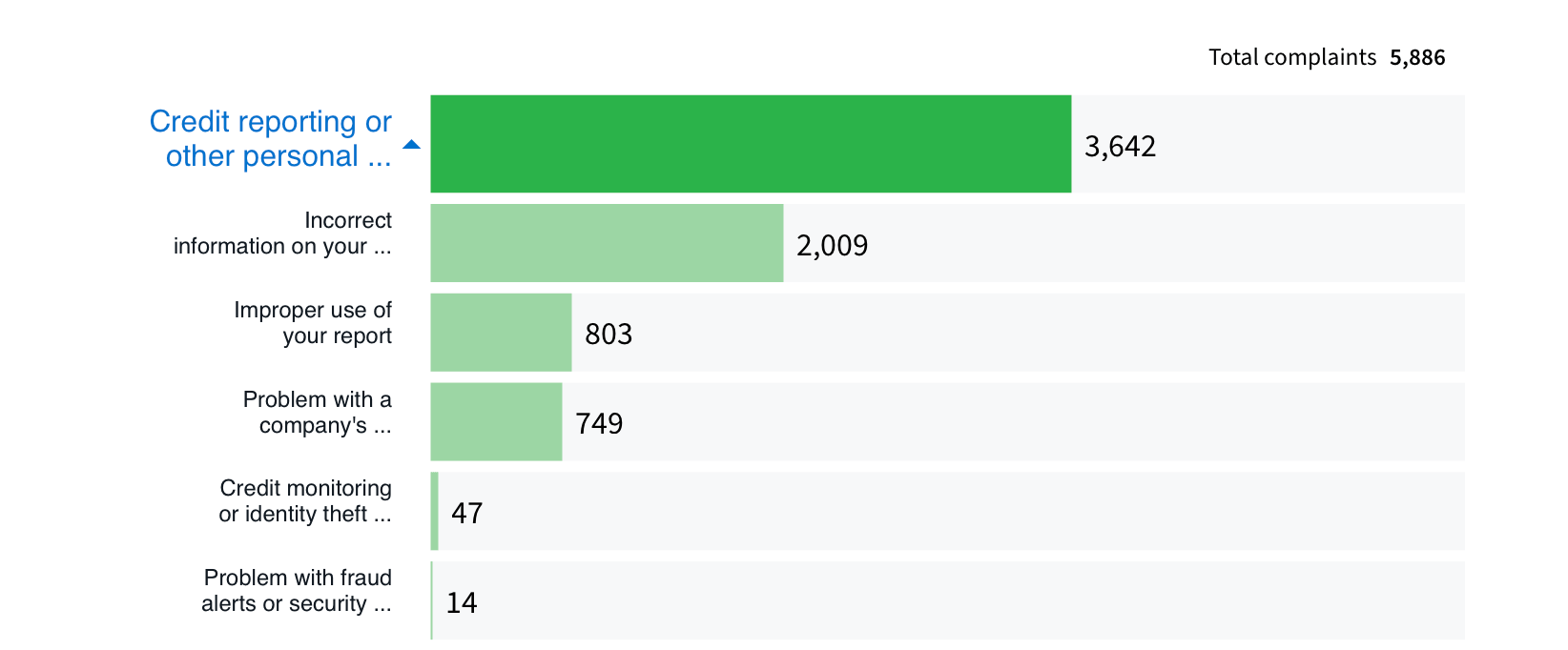
Kikoff has had a whopping 5,886 CFPB consumer complaints over the past three years, ranging from unwarranted debt collection, to threats of taking negative action.
Excuse me for being blunt on this one, but as someone who grew up working class and knows how hard it is for families to make ends meet, it doesn’t sit right with me that the guy running our central bank is comfortable profiting off of working people struggling to get by. Keeping food on the table and paying medical bills is not an opportunity for leeches to squeeze pennies out of the poor.
To see the rest of Kevin Warsh’s Public Financial Disclosure Report, click here.
Wife & Heiress
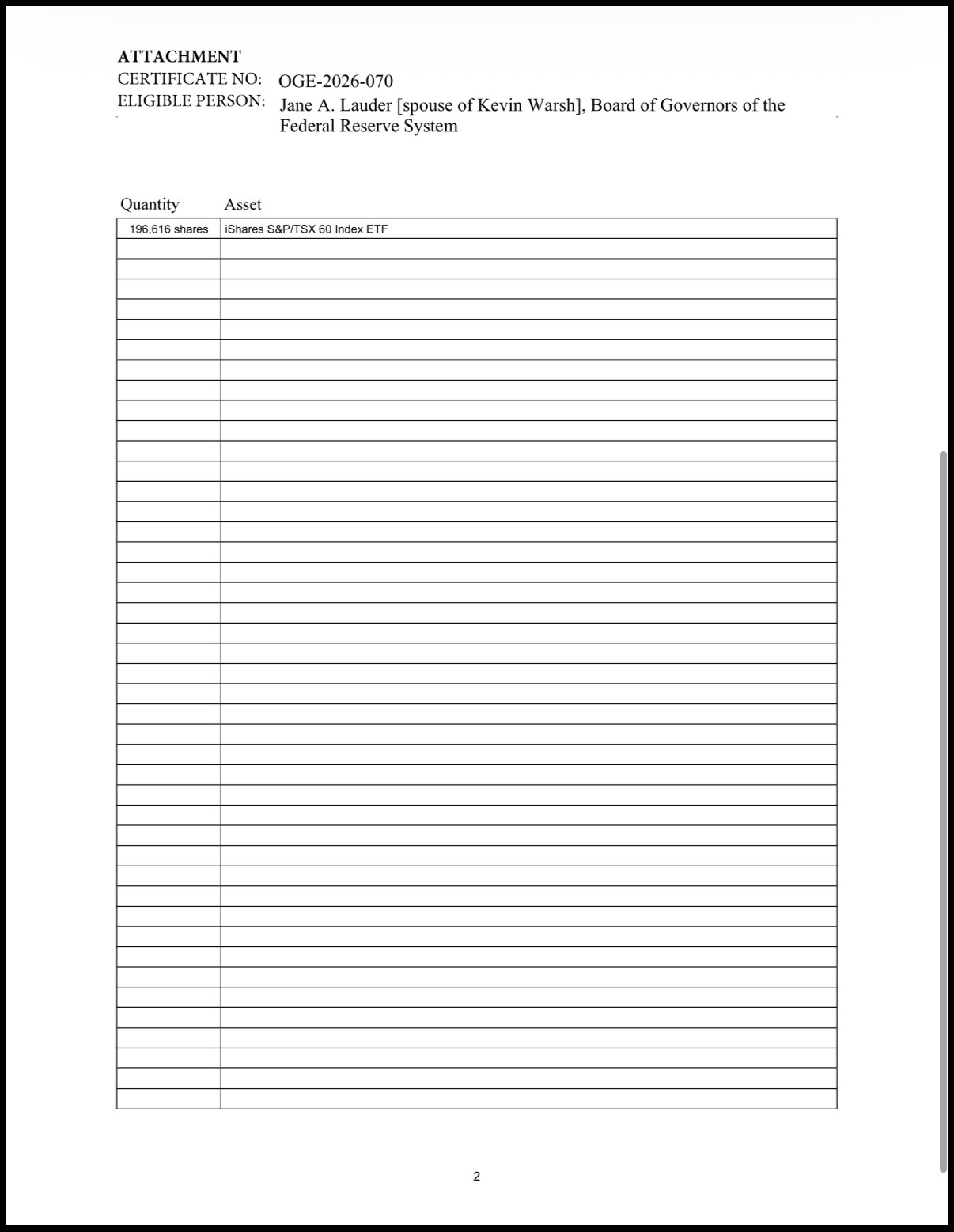
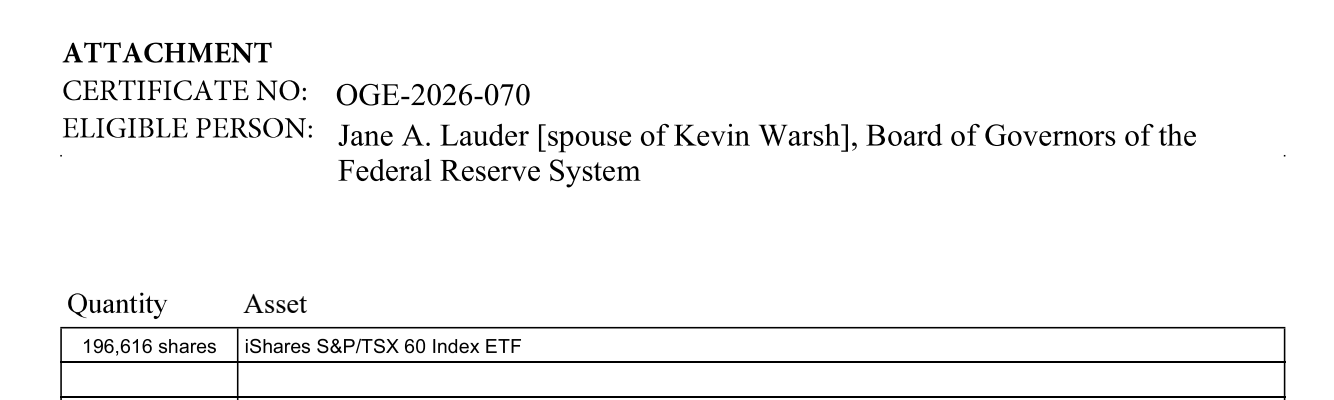
The OGE disclosure includes a Certificate of Divestment from Kevin Warsh’s spouse, heiress Jane A. Lauder, who sold 196,616 shares in one of Canada’s oldest publicly traded funds. This sale alone likely brought in over $7 million, and that’s a conservative at $36 per share.
Where We Are Now & What’s To Come
During Warsh’s confirmation hearing, Elizabeth Warren raised concerts about his conflicts of interests, citing that while Warsh may have made an agreement with OGE, the code of ethics for the Federal Reserve—an independent body—has its own laws that insist active members are prohibited from conflicts of interests like having investments that are directly impacted by decisions at the Fed. That was brushed off by Senate Banking Committee Chair, Tim Scott.

The whole situation reveals a clear gap in our checks and balances, perhaps by design:
The Fed Board of Governors is responsible for enforcing the laws that regulate the actions of their own “independent” body.
The Federal Reserve Chair is to be confirmed by Congress.
Majority rule in the Senate Banking Committee has decided to only hold the nominee to OGE standards when it comes to financial disclosures, not Fed law.
OGE made a backroom deal directly with the nominee, allowing him to be the first Chair to not disclose current assets to the committee.
See full Certificates of Divestiture for Kevin Warsh and Jane A. Lauder below.
I will continue to secure any information on Kevin Warsh’s disclosures during this 90-day period, and will publish a deep dive on his confirmation hearing within the coming days.